Why We Do It
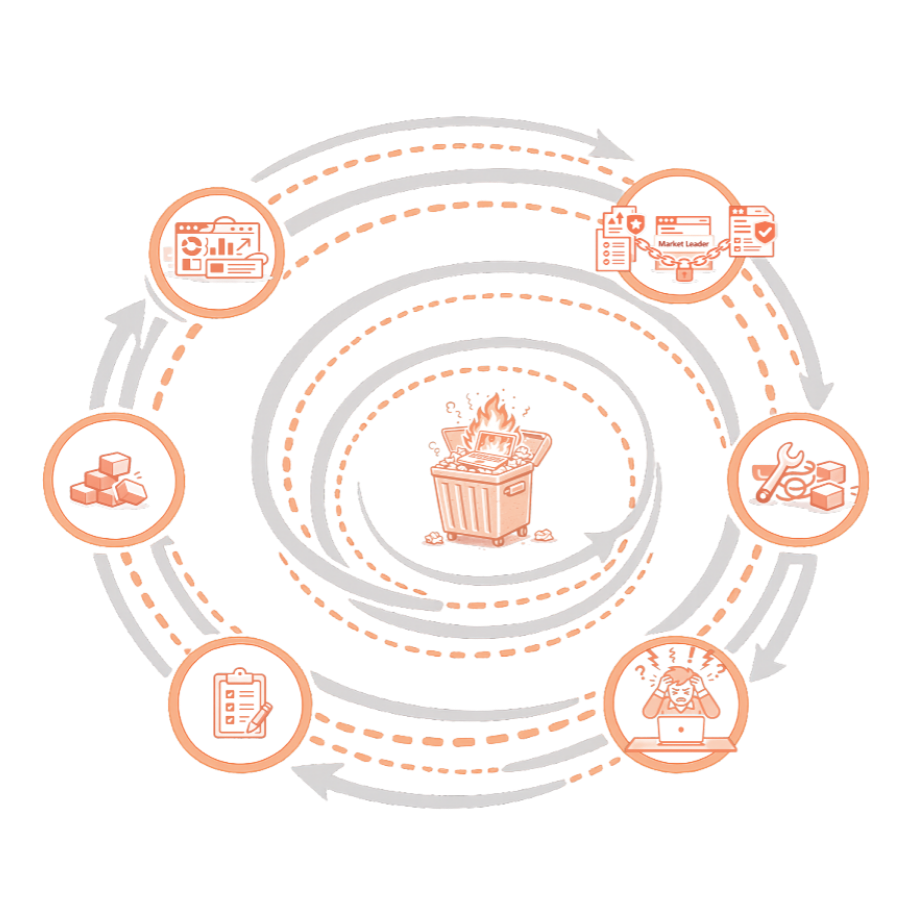
Modern enterprise systems are designed to satisfy markets, analysts, and checklists long before they ever encounter real work.
Features accumulate to win evaluations, complexity grows to serve the broadest possible audience, and buyers choose “safe” platforms to reduce personal risk rather than improve outcomes.
What’s left is software that can do almost anything in theory, but makes everyday tasks harder in practice.
Implementation becomes an exercise in customization, workarounds, and training users to adapt to the system – locking organizations into a cycle that adds friction instead of value over time.

Breadth Based Evaluation
Industry analysts define comparison frameworks that prioritize:
- Feature count
- Market coverage
- Configurability
- Cross-industry applicability

Feature Accumulation
To remain competitive, vendors:
- Add features to satisfy every category
- Expand scope to adjacent use cases
- Avoid removing anything (ever)

Maximum Optionality, Minimum Clarity
To remain competitive, vendors:
- Add features to satisfy every category
- Expand scope to adjacent use cases
- Avoid removing anything (ever)
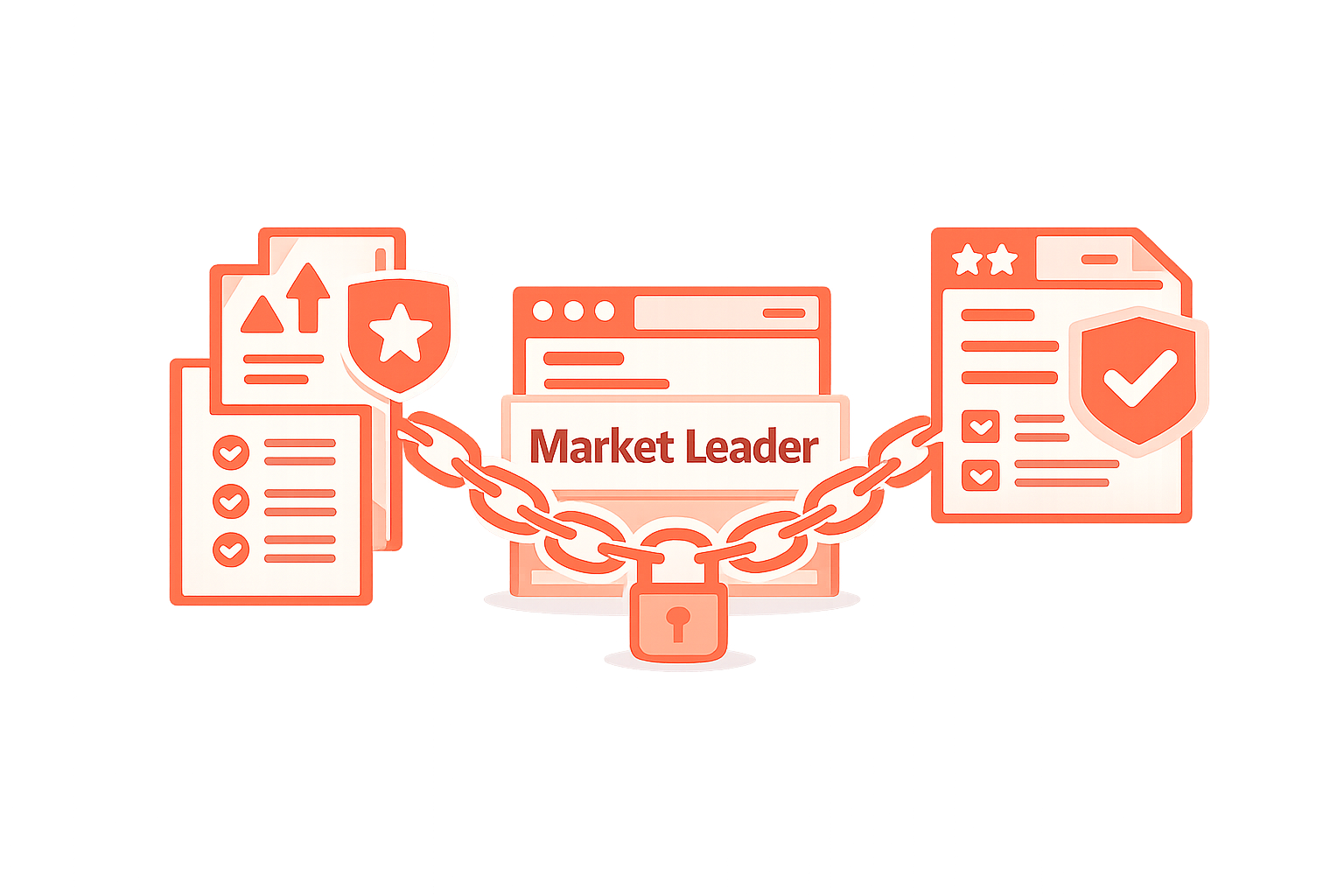
Defensive Purchasing
To remain competitive, vendors:
- Add features to satisfy every category
- Expand scope to adjacent use cases
- Avoid removing anything (ever)
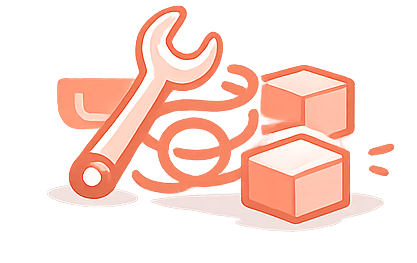
Customization or Comformity
Teams must either:
- Pay to customize endlessly
- Change how they work
- Invent off-label processes
- Train people to think like the system

Increased Friction, Reduce Value
Results include:
- Slower work
- Lower adoption
- Shadow systems
- Burned-out teams
- Disillusionment with “digital transformation”
Are you a victim already? Are you at risk?
You probably know already, but answering “yes” to two or more questions below will provide definitive proof.
Consider the application you’re supposed to use for your primary tasks:
Do you have lots of fields on your screens that you don’t use and don’t know what they’re for?
Are you constantly frustrated with the number of clicks it takes to complete your most common tasks?
Does it take multiple training sessions to learn how to use the system?
Do you consult a list of shortcuts or a “cheat sheet” so you don’t get lost?
When you ask how to do something, do you get lots of different answers?

Workspaces breaks you out of the spiral
Step 1
We start with the center of your universe and a goal to make your work life better
Step 2
We chase every piece of information you need to it’s source, adding context to your activity
Step 3
We focus on your most common actions and automate as much as possible
Step 4
We keep refining your Workspace for three months after you go live because changes are inevitable
Step 5
We give you a customized interface that just makes sense